Difference between revisions of "Monumenta Kircheri"
ArchivesPUG (talk | contribs) |
ArchivesPUG (talk | contribs) |
||
| Line 34: | Line 34: | ||
=== '''Museo Kircheriano''' === | === '''Museo Kircheriano''' === | ||
The Kircherian Museum, thus named after its first curator, the Jesuit Father Athanasius Kircher, was an encyclopedic collection established at the Roman College in 1651 as a requisite for receiving the legacy bequeathed by the patrician Alfonso Donnino. The museum became relatively famous in its time and is often mentioned in current literature as an example of Early Modern Wunderkammer or Curiosity Cabinet. | The Kircherian Museum, thus named after its first curator, the Jesuit Father Athanasius Kircher, was an encyclopedic collection established at the Roman College in 1651 as a requisite for receiving the legacy bequeathed by the patrician Alfonso Donnino. The museum became relatively famous in its time and is often mentioned in current literature as an example of Early Modern Wunderkammer or Curiosity Cabinet. | ||
| − | For all the contents about the Museum: | + | For all the contents about the Museum:<lb/> |
[[Kircherian_Museum|Kircherian Museum]]<lb/> | [[Kircherian_Museum|Kircherian Museum]]<lb/> | ||
==='''Organum Mathematicum'''=== | ==='''Organum Mathematicum'''=== | ||
The purpose of this project is to offer a comprehensive collection of contributions specifically devoted to Athanasius Kircher’s Organum mathematicum (approximately 1661). | The purpose of this project is to offer a comprehensive collection of contributions specifically devoted to Athanasius Kircher’s Organum mathematicum (approximately 1661). | ||
| − | [https://gate.unigre.it/mediawiki/index.php/Athanasius_Kircher%E2%80%99s_Organum_mathematicum._On_the_Evolutionary_Improbability_of_an_Information_Processing_Innovation | + | For all the contents about the Museum:<lb/> |
| + | [https://gate.unigre.it/mediawiki/index.php/Athanasius_Kircher%E2%80%99s_Organum_mathematicum._On_the_Evolutionary_Improbability_of_an_Information_Processing_Innovation Organum mathematicum] | ||
== Acknowledgements == | == Acknowledgements == | ||
Revision as of 13:44, 13 March 2025
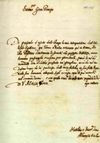
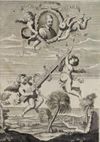
Recalling the tradition of Monumenta, within Monumenta Kircheri we want to continue and complete this work. Each letter will be transcribed, commented and annotated with the help of GATE contributors; a selection of Kircher's published works will be also transcribed. In addition, we have set up the Bibliographia Kircheriana, a useful tool for Kircher scholars that today records 677 bibliographic entries.
| Correspondence | Works | Bibliographia Kircheriana |
|---|---|---|
|
|
|
|
| Explore | Explore | Explore |
 |
More information about Kircherian Museum are available on this page. |
| The project Athanasius Kircher’s Organum mathematicum. On the Evolutionary Improbability of an Information Processing Innovation has been launched. Find out more here! |
Athanasius Kircher, a case study
Umberto Eco famously defined the Jesuit Athanasius Kircher (1602-1680) as ‘the most contemporary among our ancestors, and the most outdated among our contemporaries’. We propose to focus on Kircher's Correspondence and on his works. Athanasius Kircher is as a case study to explore the complexities and paradoxes of a ‘long’ modernity, starting from the seventeenth century up to our own world.
Thanks to last years’ activities, which have been carried out with high schools students[3], APUG decided to involve about 70 boys and girls in working on this project. In addition to transcription tasks, they also have to annotate the texts, finding entities such as Names, Works, Places, Terms and Objects.
Museo Kircheriano
The Kircherian Museum, thus named after its first curator, the Jesuit Father Athanasius Kircher, was an encyclopedic collection established at the Roman College in 1651 as a requisite for receiving the legacy bequeathed by the patrician Alfonso Donnino. The museum became relatively famous in its time and is often mentioned in current literature as an example of Early Modern Wunderkammer or Curiosity Cabinet.
For all the contents about the Museum:
Kircherian Museum
Organum Mathematicum
The purpose of this project is to offer a comprehensive collection of contributions specifically devoted to Athanasius Kircher’s Organum mathematicum (approximately 1661).
For all the contents about the Museum:
Organum mathematicum
Acknowledgements
We would like to thank:
- Fiammetta Iovine for her valuable and unique contribution to this project
- prof. Hans-Joachim Vollrath (Julius-Maximilians-Universität Würzburg, Mathematisches Institut) and dr. Thomas Conlon for their kindness in sharing transcriptions and translations of the Athanasius Kircher correspondence
- prof. Sven Knebel (Freie Universität Berlin, Institut für Philosophie Department) for the transcription of several letters from the Athanasius Kircher correspondence

Monumenta Kircheri is generously supported by Fondazione Sorgente Group.
Copyrights
Unless otherwise indicated, all files and contributions (transcriptions, pages, comments) uploaded and submitted to GATE by administrators and users are considered to be released under the Creative Commons Attribution-NonCommercial-NoDerivatives 4.0 International License. All the rights on the images of the manuscripts or other documentation are property of the Historical Archives of the Pontifical Gregorian University (User:ArchivesPUG). If you need high resolution images for your publications or for other usages, please contact us using this form.
Your contributions to GATE must be original or, at most, copied from public domain or similar free sources. Remember to always cite your sources and, more important, do not submit copyrighted work without permission.
Report any abuses to the project administrators, using this form.
References
- ↑ http://kircher.stanford.edu/
- ↑ Created by the Cultures of Knowledge Project with generous funding from The Andrew W. Mellon Foundation, EMLO is a combined finding aid and editorial interface for basic descriptions of early modern correspondence.
- ↑ https://archiviopug.org/tag/scuola-lavoro/