Difference between revisions of "Board"
| Line 12: | Line 12: | ||
<div class="written-today-title"><big>'''[[Written today]]'''</big></div> | <div class="written-today-title"><big>'''[[Written today]]'''</big></div> | ||
Thousands of letters are available on GATE, here it's a list of the letter written today in the past:<br> | Thousands of letters are available on GATE, here it's a list of the letter written today in the past:<br> | ||
| + | |||
{{#ask: [[has certain date::1601-{{CURRENTMONTH}}-{{CURRENTDAY}}]] | {{#ask: [[has certain date::1601-{{CURRENTMONTH}}-{{CURRENTDAY}}]] | ||
|format=list | |format=list | ||
Revision as of 13:08, 23 March 2020
Once a week, in this section a particularly well-finished page will be promoted. This week it's the Kircherian Museum page.
Introduction
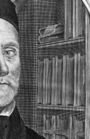
The Kircherian Museum, thus named after its first curator, the Jesuit Father Athanasius Kircher, was an encyclopedic collection established at the Roman College in 1651 as a requisite for receiving the legacy bequeathed by the patrician Alfonso Donnini.[1]</noinclude> The museum became relatively famous in its time
| Correspondence | Works | Bibliography |
|---|---|---|
|
|
|
|
| Explore | Explore | Explore |
The museum under Kircher
Donnino’s endowment consisted of his personal galleria which was said to have occupied five large rooms in the Palazzo dei Conservatori at Campidoglio in Rome. According to the donation documents, it included “statue, mascheroni, idoli, quadri, armi, pitture, tavole di marmo e di altra materia preziosa, vasi di vetro e cristallo, instrumenti musicali, piatti dipinti, diverse sorti di pietre e fragmenti di antichità”. By the time of Donnini’s donation[2]</noinclude>, the musaeum mathematicum was under the care of Athanasius Kircher, who had enlarged it with his own inventions and frequently made use of the devices in demonstrations to students, scholars and external visitors. The Kircherian Museum collection was complemented by other items of naturalia and artificialia, either sent by fellow Jesuits, from Europe and abroad, or gifted by patrons and contributors throughout its existence.
</onlyinclude>
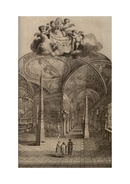
An overall picture of the collection can be grasped from the catalogue published in 1678, from the press of Joannes Jansson van Waesberghe in Amsterdam, written by Giorgio de Sepi[3], under the supervision of Kircher himself. The title of the catalogue was Romani Collegii Societatis Jesu Musaeum Celeberrimum, and it is fully readable on GATE at this link (with full-text search available). An Italian translation was edited by Eugenio Lo Sardo in Il museo del Collegio Romano di Athanasius Kircher (Napoli, 2005). More recently, a facsimile edition accompanied by an English translation was published in 2015 [4] and in 2019 a new German edition, accompanied by a substantial introductory study [5].
The museum after Kircher
After Kircher's death in 1680, the curation of the museum was left vacant for almost two decades. Accounts from the period suggest that this resulted in a decline and dispersion of the collection due to the lack of surveillance, maintenance, and organization. In 1698, another Jesuit, Filippo Bonanni, was appointed to take charge of the museum, enlarging the collection and rearranging the objects in a different site at the Roman College. This new conception of the collection was described in the Musaeum Kircherianum, a work by Bonanni printed in 1709.
Later, around 1716, Bonanni wrote a report to his superiors in which he recalled the story of the institution and described all the actions taken in the previous two decades to save and reorganize the museum. The goal of the document, titled Notizie circa la Galleria del Collegio Romano, was to secure an annual income for the museum to avoid its decline, as had happened immediately after Kircher's death. Two copies of the report—an early draft [APUG 35 VII (c)] and a calligraphic copy [APUG 895 f. 84r-101v]—are currently preserved at APUG, while another can be found at ARSI [Rom. 138, f. 172-189]]. The digitization and transcription of the draft is also available here on GATE at this link.
From the moment of the suppression of the Jesuit Society in 1773, the collection of the Kircherian Museum went through a drastic transformation. After 1870, it was eventually seized by the Italian State, which incorporated different groups of objects into newly created, specialized museums, such as the National Museum of Prehistory and Ethnography organized by Luigi Pigorini in 1876. A group of scientific objects then known as the “Kircherian Physics Cabinet” was donated to the Liceo Ennio Quirino Visconti (located to this day in the building previously occupied by the Roman College), carrying the name of Kircherian Museum.
Other documents in APUG
Besides the correspondence and works related to the period of Kircher's curatorship, APUG holds several other documents associated with the Roman College museum.
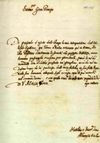
A number of letters received by Bonanni, APUG 577.III, include descriptions of archaeological discoveries in Italy and findings that were sent to Bonanni to form part of the collection. For example, in a letter dated 3 December 1731 [APUG 577.III, f. 109r-109v], Filippo Neri promises to send some ‘ossa di Gigante’ and suggests putting them in a box covered by some Etruscan vases in order to not attract attention while going through customs. The Collegio also appears to have been a hub for the distribution of antiquarian publications. On 27 March 1725, Francesco de' Ficoroni writes to Bonanni [APUG 577.III, f. 124] to order four books, including two copies of Il Tempio Vaticano (Carlo Fontana, 1694) and a copy of Bonanni’s Gabinetto Armonico (1722).
The manuscript bundle APUG 35 contains many records of the management of the museum, mostly dated from the 19th century. APUG 35 VII (a) is a copy of an Apostolic Brief issued by Clement XI in 1702 confirming the privileges of the College and the Museum. Among the documents in folder APUG 35 I, there is a request made by the Jesuit Provincial in 1839 for the regular submission of the Museum’s accounts, whereas APUG VII (i) is a ledger for the period from 1846 to 1870 in compliance to that request. The bundle also includes a list of accessions to the museum dated 18 May 1895, as well as a number of bills for works and furnishing in the museum, mainly during the 1850s and 1860s.
In addition, APUG 35 II is an undated catalogue of the Museum attributed to the Jesuit Francesco Tongiorgi, organized by class of material, presently consisting of unbound sheets held in different folders: lists minerals; lists statuary, lamps and candelabra; lists various classes of inscriptions; numismatic collections; lists classical inscriptions; brick and pottery stamps; and mainly graffiti.
2025-05
Aggiornamento della pagina dedicata al Fondo Concilio di Trento
2025-01
Conclusa la prima tappa di inventariazione e catalogazione del Fondo Collegio Romano.
2024-09
A partire da settembre, due tirocinanti dell'università "La Sapienza" e un tirocinante dell'università americana di Notre Dame, sono al lavoro sui seguenti progetti di trascrizione e analisi in GATE:
- Dialogus Asceticus Cosmiele et Theodidacto Interlocutoribus, a cura di Nazwin Palines, Notre Dame University
- Pierre Favre - Memoriale, a cura di Michela Bedini, Università "La Sapienza"
- Corrispondenza Kircher - Montalbani, a cura di Alessandro Heraldsen, Università "La Sapienza"
Older news
2023-09-11
2023-10-09 Roberto Bellarmino e la cultura rabbinica del suo tempo. Presentazione dell’edizione digitale del manoscritto autografo e inedito Notae in Genesim (APUG 385b). E' possibile prenotarsi compilando il form.
2022-09-30
The APUG promoted a seminar for restorers and conservators to reflect on the issues that emerged during the diagnostic analysis and restoration work carried out on codex FC 1165/1 over more than two years of the project.
2022-05-30
The School of Arts and Humanities of the University of Lisbon and the the Archives of the Pontifical Gregorian University present the manuscript of António Vieira's Clavis Prophetarum (FC 1165/1).
2021-02-23
New special project in Monumenta Bellarmini: L'Index haereticorum di Roberto Bellarmino: un progetto in collaborazione con l'Universidad Católica de Córdoba. Thanks to f. José L. Narvaja collaboration the text of the unpublished Bellarmine's Index haereticorum is now available on GATE.
2021-02-19
New collection available! A collection dedicated to Giuseppe Gianfranceschi - jesuit, scientist and former rector of the Pontifical Gregorian University - has been opened. At the moment it includes four sections: La spedizione polare, Radio Vaticana, ASCI, Accademia.
Thousands of letters are available on GATE, here it's a list of the letter written today in the past:
- ↑ AKC Bibliography 0070
- ↑ Alfonso Donnino lascia in eredità ai Gesuiti del Collegio Romano la sua collezione antiquaria e chiede di essere tumulato nella chiesa di S. Ignazio. 07/may/1651. In: AKC Bibliography 0070, p. 324.
- ↑ For information on de Sepi, see the introductory study by Tina Asmussen, Lucas Burkart and Hole Rößler in the 2019 edition of Musaeum Celeberrimum.
- ↑ The celebrated Museum of the Roman College of the Society of Jesus : a facsimile of the 1678 Amsterdam edition of Giorgio de Sepi's description of Athanasius Kircher's Museum "Musæum celeberrimum Collegii Romani Societatis Jesu". Translation by Anastasi Callinicos and Daniel Höhr; annotations by Jane Stevenson; editions and afterword by Peter Davidson. Published by St Omers Press, Stonyhurst and Saint Joseph's University Press, Philadelphia.
- ↑ Hauptwerke. Band 11: Musaeum Celeberrimum (ed. Georgius de Sepibus). - Vita Patris Athanasii Kircheri. Edited by Anne Eusterschulte, Olaf Breidbach and Wilhelm Schmidt-Biggemann. 2019 edition of ''Musaeum Celeberrimum''


