Difference between revisions of "User:Irene Pedretti/Sandbox"
ArchivesPUG (talk | contribs) |
|||
| (2 intermediate revisions by 2 users not shown) | |||
| Line 1: | Line 1: | ||
| + | |||
<!-- You can use this page to test wiki code. | <!-- You can use this page to test wiki code. | ||
| Line 4: | Line 5: | ||
It works like any other wiki page; in particular, other users may be able to see or edit it. --> | It works like any other wiki page; in particular, other users may be able to see or edit it. --> | ||
| − | Support our appeal to help save the | + | Runtime API |
| + | timeline.load([ | ||
| + | { | ||
| + | "id": "ada-lovelace", | ||
| + | "lane": "people", | ||
| + | "title": "Ada Lovelace", | ||
| + | "subtitle": "Mathematician", | ||
| + | "from": { | ||
| + | "year": 1815, | ||
| + | "month": 12, | ||
| + | "day": 10 | ||
| + | }, | ||
| + | "to": { | ||
| + | "year": 1852, | ||
| + | "month": 11, | ||
| + | "day": 27 | ||
| + | }, | ||
| + | "rank": 100, | ||
| + | "imageUrl": "https://upload.wikimedia.org/wikipedia/commons/thumb/a/a4/Ada_Lovelace_portrait.jpg/250px-Ada_Lovelace_portrait.jpg" | ||
| + | }, | ||
| + | { | ||
| + | "id": "katherine-johnson", | ||
| + | "lane": "people", | ||
| + | "title": "Katherine Johnson", | ||
| + | "subtitle": "NASA mathematician", | ||
| + | "from": { | ||
| + | "year": 1918, | ||
| + | "month": 8, | ||
| + | "day": 26 | ||
| + | }, | ||
| + | "to": { | ||
| + | "year": 2020, | ||
| + | "month": 2, | ||
| + | "day": 24 | ||
| + | }, | ||
| + | "rank": 98, | ||
| + | "imageUrl": "https://upload.wikimedia.org/wikipedia/commons/thumb/6/6d/Katherine_Johnson_1983.jpg/250px-Katherine_Johnson_1983.jpg" | ||
| + | }, | ||
| + | { | ||
| + | "id": "mw18014", | ||
| + | "lane": "missions", | ||
| + | "title": "MW 18014", | ||
| + | "subtitle": "First rocket in space", | ||
| + | "from": { | ||
| + | "year": 1944, | ||
| + | "month": 6, | ||
| + | "day": 20 | ||
| + | }, | ||
| + | "rank": 92, | ||
| + | "imageUrl": "https://upload.wikimedia.org/wikipedia/commons/thumb/3/3c/Bundesarchiv_Bild_141-1880%2C_Peenem%C3%BCnde%2C_Start_einer_V2.jpg/500px-Bundesarchiv_Bild_141-1880%2C_Peenem%C3%BCnde%2C_Start_einer_V2.jpg" | ||
| + | }, | ||
| + | { | ||
| + | "id": "sputnik-1", | ||
| + | "lane": "missions", | ||
| + | "title": "Sputnik 1", | ||
| + | "subtitle": "First artificial satellite", | ||
| + | "from": { | ||
| + | "year": 1957, | ||
| + | "month": 10, | ||
| + | "day": 4 | ||
| + | }, | ||
| + | "rank": 92, | ||
| + | "imageUrl": "https://upload.wikimedia.org/wikipedia/commons/thumb/b/be/Sputnik_asm.jpg/250px-Sputnik_asm.jpg" | ||
| + | } | ||
| + | ]); | ||
| + | |||
| + | timeline.loadLaneArticles("technology", [ | ||
| + | { | ||
| + | "id": "eniac", | ||
| + | "title": "ENIAC", | ||
| + | "subtitle": "Electronic general-purpose computer", | ||
| + | "from": { | ||
| + | "year": 1945, | ||
| + | "month": 12, | ||
| + | "day": 10 | ||
| + | }, | ||
| + | "rank": 88, | ||
| + | "imageUrl": "https://upload.wikimedia.org/wikipedia/commons/thumb/d/d3/Glen_Beck_and_Betty_Snyder_program_the_ENIAC_in_building_328_at_the_Ballistic_Research_Laboratory.jpg/330px-Glen_Beck_and_Betty_Snyder_program_the_ENIAC_in_building_328_at_the_Ballistic_Research_Laboratory.jpg" | ||
| + | }, | ||
| + | { | ||
| + | "id": "iphone-launch", | ||
| + | "title": "iPhone Launch", | ||
| + | "subtitle": "Mobile computing milestone", | ||
| + | "from": { | ||
| + | "year": 2007, | ||
| + | "month": 1, | ||
| + | "day": 9 | ||
| + | }, | ||
| + | "rank": 90 | ||
| + | } | ||
| + | ]); | ||
| + | |||
| + | Support our appeal to help save the Pontifical Gregorian University's Archives, a collection of over 6,000 manuscripts. This includes important at-risk works that are in urgent need of conservation. | ||
Today, your support —whatever its size— can make a real difference in many ways. | Today, your support —whatever its size— can make a real difference in many ways. | ||
| Line 25: | Line 118: | ||
==='''Why donate?'''=== | ==='''Why donate?'''=== | ||
<div style="text-align:justify"> | <div style="text-align:justify"> | ||
| − | The conservation | + | The conservation of our historical memory may not be one of the pressing "emergencies" that dominate the headlines. Yet the loss, or the inability to consult, a unique manuscript—an irreplaceable object that can never be fully reproduced—results in a loss that is impossible to overstate: a fragment of history vanishes forever. |
| − | Our | + | |
| − | + | Our mission is to prevent the rupture in the material transmission of knowledge that has reached us through the centuries, and for which we are now responsible. | |
| − | + | ||
| − | The | + | To address the vast number of unique documents in precarious condition, the APUG strongly advocated for the creation of an in-house restoration laboratory. Given the scale of the task, we need all the help we can get. Thanks to institutional grants and the generosity of individual donors, we have successfully conserved numerous codices in recent years. |
| − | + | ||
| + | The Historical Archive of the PUG approaches the valorisation of its collections as a complex, integrated process. This begins with daily preventive conservation and precise cataloguing, extends to specialised treatments for the consolidation and restoration of codices, and culminates in the digital publication of manuscripts to facilitate both scholarly research and public. | ||
{| style="margin:auto" | {| style="margin:auto" | ||
Latest revision as of 11:13, 10 June 2026
Runtime API timeline.load([
{
"id": "ada-lovelace",
"lane": "people",
"title": "Ada Lovelace",
"subtitle": "Mathematician",
"from": {
"year": 1815,
"month": 12,
"day": 10
},
"to": {
"year": 1852,
"month": 11,
"day": 27
},
"rank": 100,
"imageUrl": "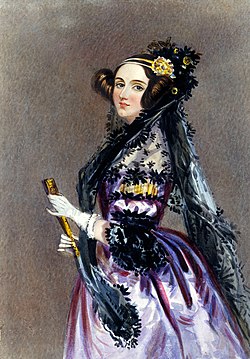 "
},
{
"id": "katherine-johnson",
"lane": "people",
"title": "Katherine Johnson",
"subtitle": "NASA mathematician",
"from": {
"year": 1918,
"month": 8,
"day": 26
},
"to": {
"year": 2020,
"month": 2,
"day": 24
},
"rank": 98,
"imageUrl": "
"
},
{
"id": "katherine-johnson",
"lane": "people",
"title": "Katherine Johnson",
"subtitle": "NASA mathematician",
"from": {
"year": 1918,
"month": 8,
"day": 26
},
"to": {
"year": 2020,
"month": 2,
"day": 24
},
"rank": 98,
"imageUrl": " "
},
{
"id": "mw18014",
"lane": "missions",
"title": "MW 18014",
"subtitle": "First rocket in space",
"from": {
"year": 1944,
"month": 6,
"day": 20
},
"rank": 92,
"imageUrl": "
"
},
{
"id": "mw18014",
"lane": "missions",
"title": "MW 18014",
"subtitle": "First rocket in space",
"from": {
"year": 1944,
"month": 6,
"day": 20
},
"rank": 92,
"imageUrl": " "
},
{
"id": "sputnik-1",
"lane": "missions",
"title": "Sputnik 1",
"subtitle": "First artificial satellite",
"from": {
"year": 1957,
"month": 10,
"day": 4
},
"rank": 92,
"imageUrl": "
"
},
{
"id": "sputnik-1",
"lane": "missions",
"title": "Sputnik 1",
"subtitle": "First artificial satellite",
"from": {
"year": 1957,
"month": 10,
"day": 4
},
"rank": 92,
"imageUrl": "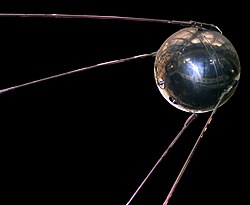 "
}
"
}
]);
timeline.loadLaneArticles("technology", [
{
"id": "eniac",
"title": "ENIAC",
"subtitle": "Electronic general-purpose computer",
"from": {
"year": 1945,
"month": 12,
"day": 10
},
"rank": 88,
"imageUrl": " "
},
{
"id": "iphone-launch",
"title": "iPhone Launch",
"subtitle": "Mobile computing milestone",
"from": {
"year": 2007,
"month": 1,
"day": 9
},
"rank": 90
}
"
},
{
"id": "iphone-launch",
"title": "iPhone Launch",
"subtitle": "Mobile computing milestone",
"from": {
"year": 2007,
"month": 1,
"day": 9
},
"rank": 90
}
]);
Support our appeal to help save the Pontifical Gregorian University's Archives, a collection of over 6,000 manuscripts. This includes important at-risk works that are in urgent need of conservation.
Today, your support —whatever its size— can make a real difference in many ways.
| Make a donation | Adopt a manuscript | Become a Patron |
|---|---|---|
|
|
|
|


Why donate?
The conservation of our historical memory may not be one of the pressing "emergencies" that dominate the headlines. Yet the loss, or the inability to consult, a unique manuscript—an irreplaceable object that can never be fully reproduced—results in a loss that is impossible to overstate: a fragment of history vanishes forever.
Our mission is to prevent the rupture in the material transmission of knowledge that has reached us through the centuries, and for which we are now responsible.
To address the vast number of unique documents in precarious condition, the APUG strongly advocated for the creation of an in-house restoration laboratory. Given the scale of the task, we need all the help we can get. Thanks to institutional grants and the generosity of individual donors, we have successfully conserved numerous codices in recent years.
The Historical Archive of the PUG approaches the valorisation of its collections as a complex, integrated process. This begins with daily preventive conservation and precise cataloguing, extends to specialised treatments for the consolidation and restoration of codices, and culminates in the digital publication of manuscripts to facilitate both scholarly research and public.




