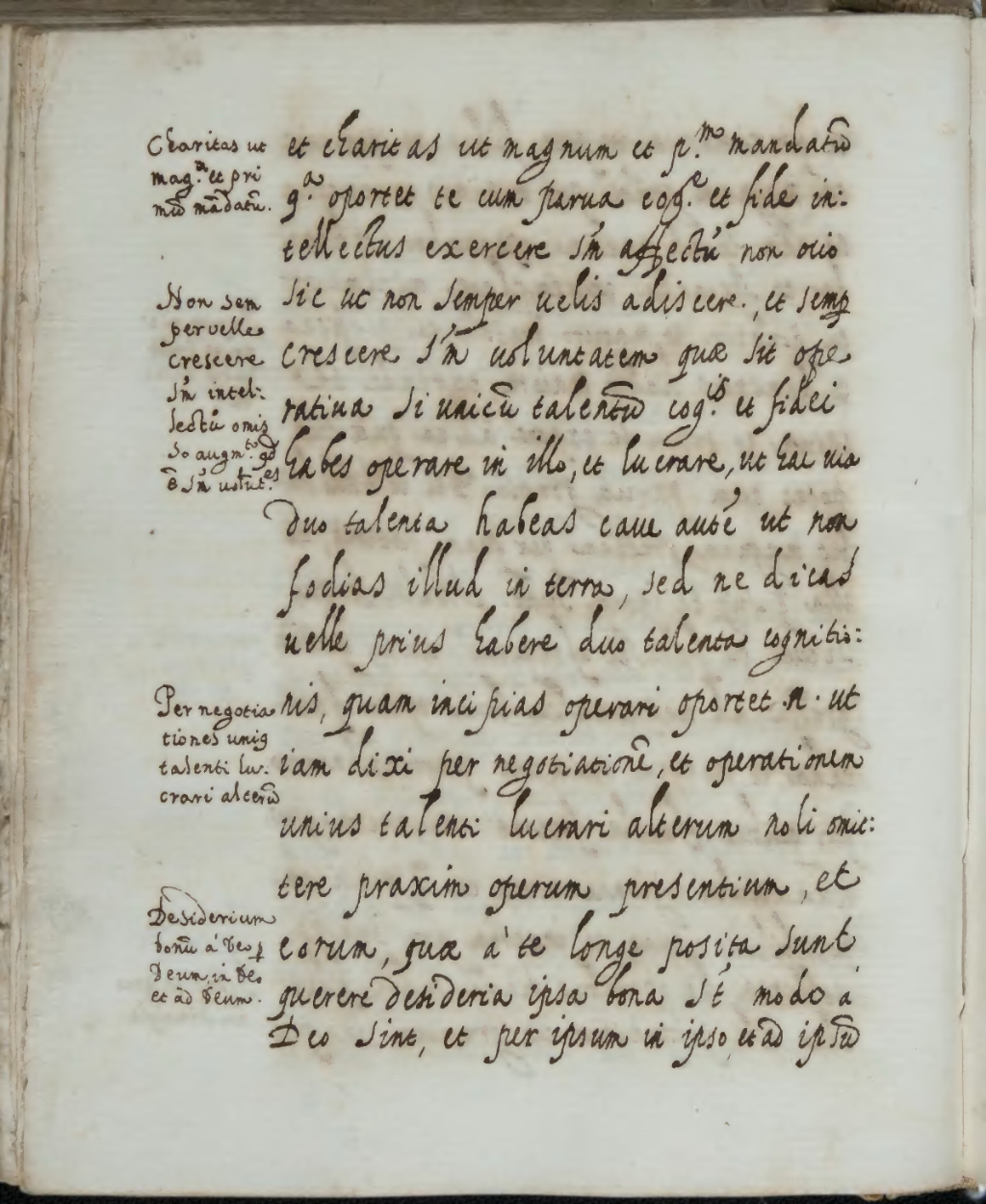
f. 103v
Charitas ut magnum et primum mandatum.
et charitas ut magnum et primum mandatum quia oportet te cum parva cognitione et fide intellectus
exercere[1]
secundum affectum non
ocio[2]
sic ut non semper velis a[d]discere, et semper crescere
secundum[3]
voluntatem quae sit
Non semper velle crescere secundum intellectum omisso augmento quod est secundum voluntates.
operativa.
Si unicum talentum cognitionis et fidei habes operare in illo, et lucrare, ut hac via duo talenta habeas cave autem ut non fodias illud in terra, sed ne
dicas[4]
velle prius[5]
habere duo talenta cognitionis, quam incipias operari oportet enim ut iam dixi
per negotiationem, et
operationem[6]
unius talenti
Per negotiationes unius talenti lucrari alterum.
lucrari alterum[7]
noli omittere praxim operum presentium[8], et eorum quae
a[9]
te[10]
longe[11]
posita sunt
querere[12]
desideria ipsa bona sunt modo a Deo sint, et per ipsum in ipso, et ad
Desiderium bonum a Deo per Deum, in Deo et ad Deum.
ipsum.
_______________
- ↑ exercere] crescere MF
- ↑ ocio] otiosum MF. An appropriate change -- ocio is the Spanish form.
- ↑ secundum] add. intellectum, omisso augmento quod est secundum MF. The MF addition makes the point clearer, though the message remains essentially the same.
- ↑ dicas] add. te MF
- ↑ velle prius] prius velle MF
- ↑ operationem] add. illius MF
- ↑ alterum] add. etc. MF
- ↑ presentium] praesentium MF
- ↑ a] iuxta MF
- ↑ te] add. sunt, pro contemplatione otiosa operum futurorum, et eorum quae MF. The addition encourages the consideration of immediate impulses, as opposed to idle plans for the distant future.
- ↑ longe] add. ante adhuc MF
- ↑ querere] om. MF